Time Interval Filter
The time interval filter (also called drop age) determines the period across which the system scans for market drops. Learn how to configure it to catch sudden drops or more gradual, systemic movements.
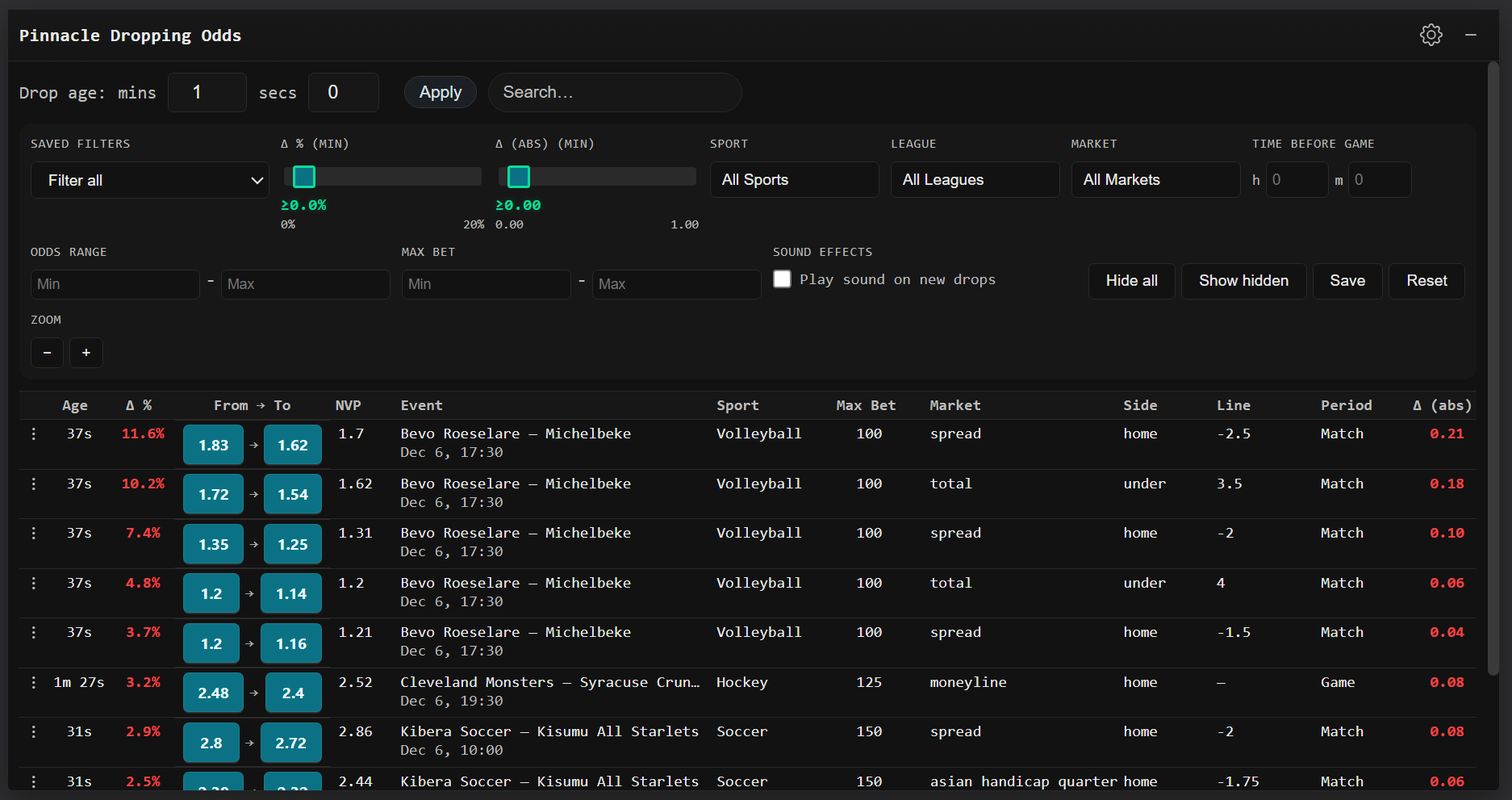
The time interval filter is a fundamental setting that controls how far back the system looks when detecting odds drops.
This filter determines the time window used to compare current odds with previous odds, helping you identify significant market movements within your chosen timeframe.
Understanding how to set this filter correctly can help you focus on the types of drops that align with your betting strategy.
For more information on configuring all your alert filters, see our tailoring alert configurations guide.
How Does the Time Interval Filter Work?
The time interval is the period across which the system scans for market drops to alert you about.
For example, if you set it to three minutes, then every time there is an odds change at the sharp bookmaker, the system will compare the new odds to the odds from three minutes ago to see if the change has created a drop that matches your other filters.
You can set the time interval using minutes and seconds. The default setting is typically 1 minute (60 seconds), which works well for most situations.
The system continuously monitors odds changes and calculates whether the movement within your specified time window represents a significant drop based on your other filter settings.
If the drop percentage or absolute change meets your minimum thresholds and occurs within the time interval you've set, you'll receive an alert.
This filter works in conjunction with your other filters, so a drop must meet all your criteria (drop percentage, market type, odds range, etc.) within the specified time window to trigger an alert.
For more information on how drops are calculated, see our minimum drop percent filter guide.
Recommended Time Interval
We recommend setting your time interval to three minutes if you are new to dropping odds betting.
Other time intervals work well depending on your goals, but three minutes has been proven over many thousands of alerts to yield consistent value bets.
This setting provides a good balance between catching meaningful market movements while filtering out minor fluctuations that don't represent genuine value opportunities.
As you gain experience, you may want to experiment with different intervals:
- Shorter intervals (30 seconds - 2 minutes): Catch sudden, sharp drops caused by new information
- Medium intervals (3-5 minutes): Balanced approach for most situations
- Longer intervals (6-10 minutes): Catch more gradual, systemic drops
The optimal setting depends on:
- Your betting strategy and goals
- The sports and markets you're focusing on
- How quickly your soft bookmakers typically adjust
- Your ability to respond quickly to alerts
Start with the recommended three minutes and adjust based on your results and preferences.
Catching Sudden or Systemic Drops
Do you want to catch drops that occur over a short period, a long period, or somewhere in between? That is the question you need to ask yourself when setting the time interval filter.
Generally speaking, we are trying to place a bet on a slow-moving bookmaker which hasn't reacted to a new piece of information that has entered the market (i.e., a key player is left off the team sheet).
A new piece of information can cause a sharp drop that creates great value opportunities for us, so setting your time interval to just a couple of minutes is a great way to catch these sudden drops.
These sudden drops often occur when:
- Team news becomes available (injuries, lineup changes)
- Weather conditions change significantly
- Sharp bettors identify value and place large bets
- New information enters the market that affects the outcome probability
If you want to be alerted about more consistent drops, then increase your time interval.
Long-drawn-out drops can also create value opportunities if a soft bookmaker has poor quality automation or traders who are consistently behind the market.
These systemic drops occur when:
- Soft bookmakers are slow to adjust their odds
- Automated systems aren't responding quickly enough
- Market inefficiencies persist over longer periods
- Traders are consistently lagging behind sharp bookmaker movements
Longer time intervals (5-10 minutes) help you catch these gradual movements that may be missed with shorter intervals.
The key is understanding what type of opportunities you want to focus on and setting your time interval accordingly.
For more information on identifying different types of drops, see our dropping odds strategy guide.
Ready to configure your time interval filter? Use FairOdds Terminal to set up custom alert filters and optimize your dropping odds strategy to catch the types of drops that work best for your betting approach.
Time Interval Filter FAQ
How does the time interval filter work?
The time interval is the period across which the system scans for market drops to alert you about. For example, if you set it to three minutes, then every time there is an odds change at the sharp bookmaker, the system will compare the new odds to the odds from three minutes ago to see if the change has created a drop that matches your other filters.
What is the recommended time interval?
We recommend setting your time interval to three minutes if you are new. Other time intervals work well, but three minutes has been proven over many thousands of alerts to yield consistent value bets.
Should I use a short or long time interval?
It depends on what type of drops you want to catch. Short intervals (1-3 minutes) are great for catching sudden drops caused by new information entering the market. Longer intervals (5-10 minutes) catch more gradual, systemic drops that occur when soft bookmakers have poor quality automation or traders who are consistently behind the market.