Look Like an Average Punter
Sportsbooks love to have losers betting against them. Most people who bet on sport lose, so you want to mirror their behavior where possible. Learn 8 tactics to blend in with recreational bettors and avoid account limitations.
Sportsbooks love to have losers betting against them. Most people who bet on sport lose, so you want to mirror their behavior where possible (not the losing part, hopefully!).
All of the tactics below are designed to make you appear like an average punter, reducing the risk of getting your account limited or restricted.
By blending in with recreational bettors, you can continue placing value bets long-term without drawing unwanted attention from bookmaker risk management teams.
For more information on avoiding limitations, see our how to avoid getting restricted guide.
Why Look Like an Average Punter?
Bookmakers use sophisticated algorithms and risk management systems to identify profitable bettors.
When they detect patterns that suggest you're a value bettor or arbitrage bettor, they'll limit your stakes or restrict your account entirely.
By mimicking the behavior of average, losing punters, you reduce the likelihood of triggering these detection systems.
This allows you to maintain access to your accounts and continue placing value bets over the long term.
1. Round Up Your Betting Stakes
Rounding up your stakes to whole numbers is going to help you avoid getting your bets limited.
If your stakes aren't rounded, then you are going to draw attention to yourself as a potential arber or value bettor who is using a staking strategy.
Average punters typically bet round numbers like $10, $25, $50, or $100. They don't bet $23.47 or $87.33.
When you use Kelly Formula or other staking strategies, they often produce precise bet sizes. Round these up to the nearest whole number to avoid suspicion.
For example, if your Kelly calculation suggests a bet of $47.83, round it up to $50. If it suggests $12.34, round it up to $15.
This small adjustment can make a significant difference in how your betting patterns appear to bookmaker algorithms.
2. Bet During Peak Hours
Try to place as many value bets as possible during periods when lots of regular punters are also placing bets—i.e., on a Friday night or at the weekend.
Recreational bettors tend to bet more during:
- Friday evenings
- Weekends
- Evening hours (after work)
- Major sporting events
Betting during these peak hours helps you blend in with the crowd and reduces the visibility of your betting activity.
If you're placing bets at 3 AM on a Tuesday morning, you're more likely to stand out as someone who isn't betting recreationally.
While you can't always control when value opportunities appear, try to prioritize bets during peak hours when possible.
3. Mix in Casino Bets and Small Stake Accumulators
Throw in the odd casino bet and small stake accumulator on a Premier League game.
As long as you keep the stakes small, there's no real downside to doing this, so even if you think it's not going to have too much of an effect, I still recommend doing it.
I know it can be hard to purposefully place negative EV bets, but remember that it's going to help you make more money in the long term by protecting your accounts.
Average punters love accumulators and casino games. By occasionally placing small bets on these, you demonstrate behavior that bookmakers associate with recreational bettors.
Keep these bets small—maybe $5 or $10—so they don't significantly impact your overall profitability, but they help maintain your cover.
Consider placing a small accumulator on popular markets like Premier League matches or major tournaments, as these are exactly what recreational bettors bet on.
4. Don't Just Bet on Low-Tier Competitions
If you exclusively place bets on some obscure league, then you are likely to be flagged.
I would say if you are going to be betting on lower tiers, at least mix in some more bets on high-limit competitions like a Champions League game or the French Open.
Average punters bet on popular competitions and major events. They don't specialize in obscure leagues or niche markets.
While lower-tier competitions can offer great value opportunities, betting exclusively on them creates a pattern that bookmakers recognize as professional betting behavior.
Mix your betting across:
- Major leagues (Premier League, Champions League, NBA, etc.)
- Popular tournaments (World Cup, Grand Slams, etc.)
- Lower-tier competitions (for value opportunities)
- Different sports (not just one sport)
This diversification helps you look like a casual bettor who bets on whatever catches their interest.
5. Do Not Make Unnecessary Withdrawals
Frequent withdrawals are going to flag your account pretty quickly.
Try to only withdraw your money once you have been limited.
Average punters typically leave money in their accounts and continue betting. They don't withdraw after every winning bet or every few days.
Frequent withdrawals signal to bookmakers that you're:
- Managing your bankroll professionally
- Not betting recreationally
- Potentially using multiple accounts
- Treating betting as a business
Instead, let your balance build up naturally and only withdraw when necessary or when you've been limited.
Some bookmakers even offer better terms or bonuses to accounts that maintain balances, so this tactic can have additional benefits.
6. Avoid Making a Large First Deposit
Within the first couple of days of registration, you want to be drawing as little attention to yourself as possible.
Depositing a large amount early on is a big red flag.
Average punters typically start small and gradually increase their deposits as they get comfortable with the bookmaker.
If you deposit $5,000 on day one and immediately start placing large value bets, you're signaling that you're a professional bettor.
Instead:
- Start with a smaller deposit ($100-$500)
- Place some small bets initially
- Gradually increase your activity over time
- Make additional deposits later if needed
This gradual approach helps you establish a pattern that looks more like a recreational bettor getting started.
7. Bet Closer to Kickoff
If you are betting on games that don't kick off for weeks, then you are not blending in with the average punters, who typically like to bet very close to kickoff, usually only a few hours.
Average punters bet impulsively based on:
- Last-minute team news
- Lineup announcements
- Pre-match excitement
- Social media buzz
They don't place bets weeks in advance based on mathematical analysis.
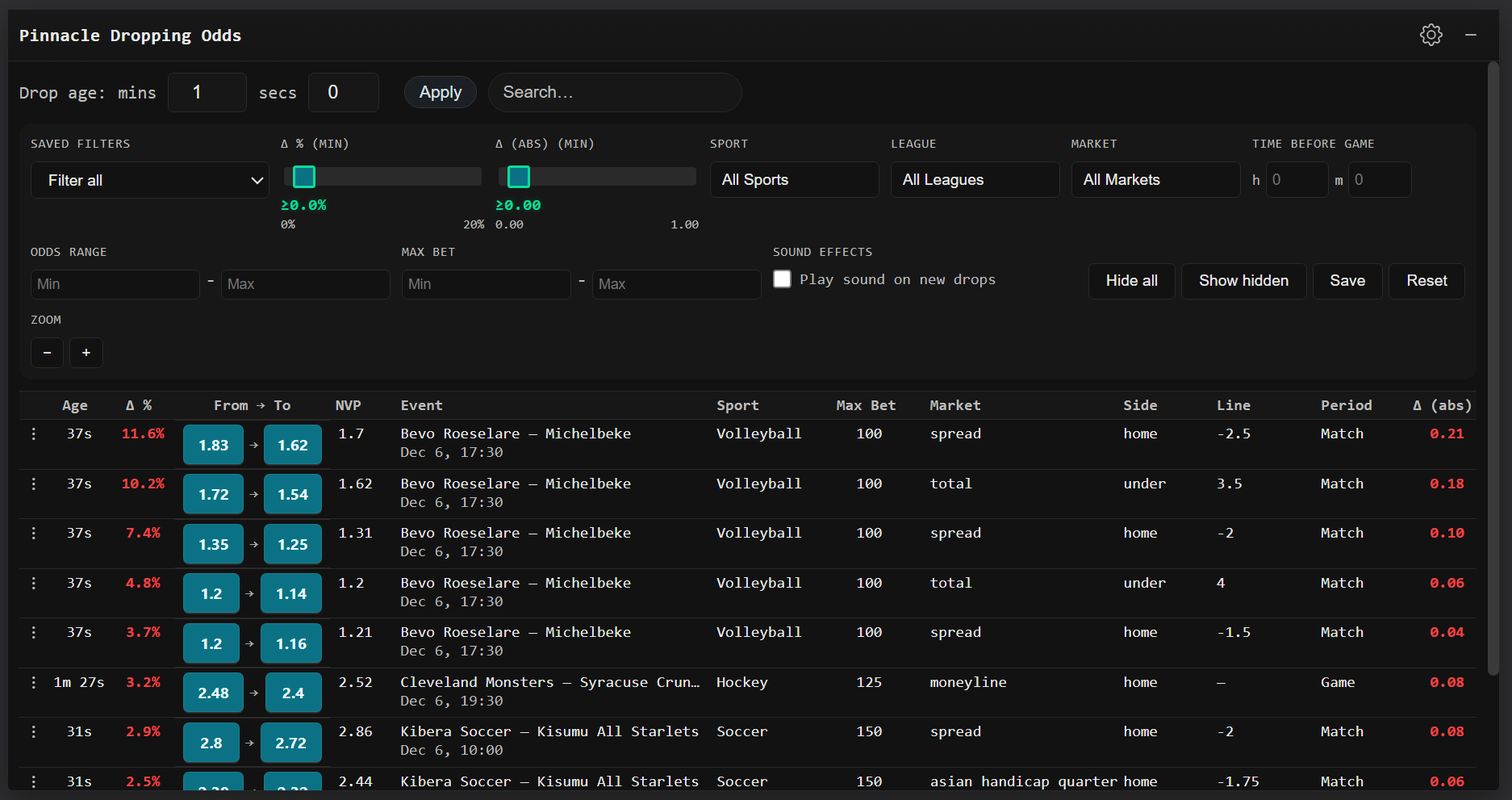
If you are using dropping odds alerts to beat bookmakers, then you might want to consider reducing your 'max time to match start filter' in your alert configurations so you are focusing on value bets on games that kick off in the near future.
Betting closer to kickoff helps you blend in with recreational bettors while still capturing value opportunities.
For more information on configuring this filter, see our max time to match start filter guide.
8. Take a Break
If your account is on an incredible run where you just can't stop winning, consider taking a short break.
Your account might be up for review, so use another sportsbook for a while, then come back to the account after a while.
Sustained winning streaks can trigger manual reviews by bookmaker risk management teams.
By taking a break during hot streaks, you:
- Reduce the intensity of your winning pattern
- Give the account time to cool off
- Allow other bettors' activity to dilute your pattern
- Return when less attention is on your account
This doesn't mean you need to stop betting entirely—just switch to other bookmakers for a period.
Having multiple accounts at different bookmakers is essential for this strategy to work.
Filters Can Help!
FairOdds Terminal allows users to configure their alerts with multiple different filters, which means our users are able to find value bets that users of other less configurable services aren't finding.
This is great for avoiding account limitations, as sportsbook traders often look to see if an account is placing bets that a lot of other accounts are also placing, indicating that they have all come from the same value or arbitrage betting service.
This means finding 'unique' value bets is a great way to fly under the radar.
By using custom filter configurations, you can:
- Focus on markets that others aren't monitoring
- Find value in less popular competitions
- Bet on opportunities that aren't being exploited by everyone
- Create a unique betting pattern that doesn't match other value bettors
For more information on configuring filters, see our tailoring alert configurations guide.
Keep on Using Your Limited Accounts
Remember, once your account has been limited, it's often still worth using it.
In some instances, you can still get decent size bets on.
Furthermore, for some sports or leagues, you might not be limited at all, so don't discard an account as soon as you see the bookmaker has put some kind of limitation on it—keep on using it!
Limitations are often:
- Sport-specific (limited on soccer but not tennis)
- Market-specific (limited on moneylines but not totals)
- Time-specific (limited during peak hours but not off-peak)
- Stake-specific (can still bet smaller amounts)
Even with limitations, you can often continue to extract value from the account, just at a reduced rate.
For more information on managing limited accounts, see our how to avoid getting restricted guide.
Ready to implement these tactics? Use FairOdds Terminal to configure custom alert filters, find unique value bets, and blend in with average punters while maintaining your edge.
Looking Like an Average Punter FAQ
Why should I try to look like an average punter?
Sportsbooks love to have losers betting against them. Most people who bet on sport lose, so you want to mirror their behavior where possible. By blending in with average punters, you reduce the risk of getting your account limited or restricted, which allows you to continue placing value bets long-term.
Should I round up my betting stakes?
Yes. Rounding up your stakes to whole numbers helps you avoid getting your bets limited. If your stakes aren't rounded, you draw attention to yourself as a potential arber or value bettor who is using a staking strategy. Average punters typically bet round numbers.
When should I place my value bets?
Try to place as many value bets as possible during periods when lots of regular punters are also placing bets, such as Friday nights or weekends. Betting during peak hours helps you blend in with recreational bettors.
Should I place casino bets and accumulators?
Yes. Mixing in the odd casino bet and small stake accumulator helps you look like an average punter. As long as you keep the stakes small, there's no real downside. I know it can be hard to purposefully place negative EV bets, but remember that it's going to help you make more money in the long term by protecting your accounts.
What should I do if my account gets limited?
Remember that once your account has been limited, it's often still worth using. In some instances, you can still get decent size bets on. Furthermore, for some sports/leagues, you might not be limited at all, so don't discard an account as soon as you see the bookmaker has put some kind of limitation on it—keep on using it!