Why 80% of Dropping Odds Alerts Are Useless
The majority of dropping odds alerts you receive will likely not lead to a value bet, but that's totally normal. Learn why most alerts don't convert and how to improve your alert-to-bet ratio.
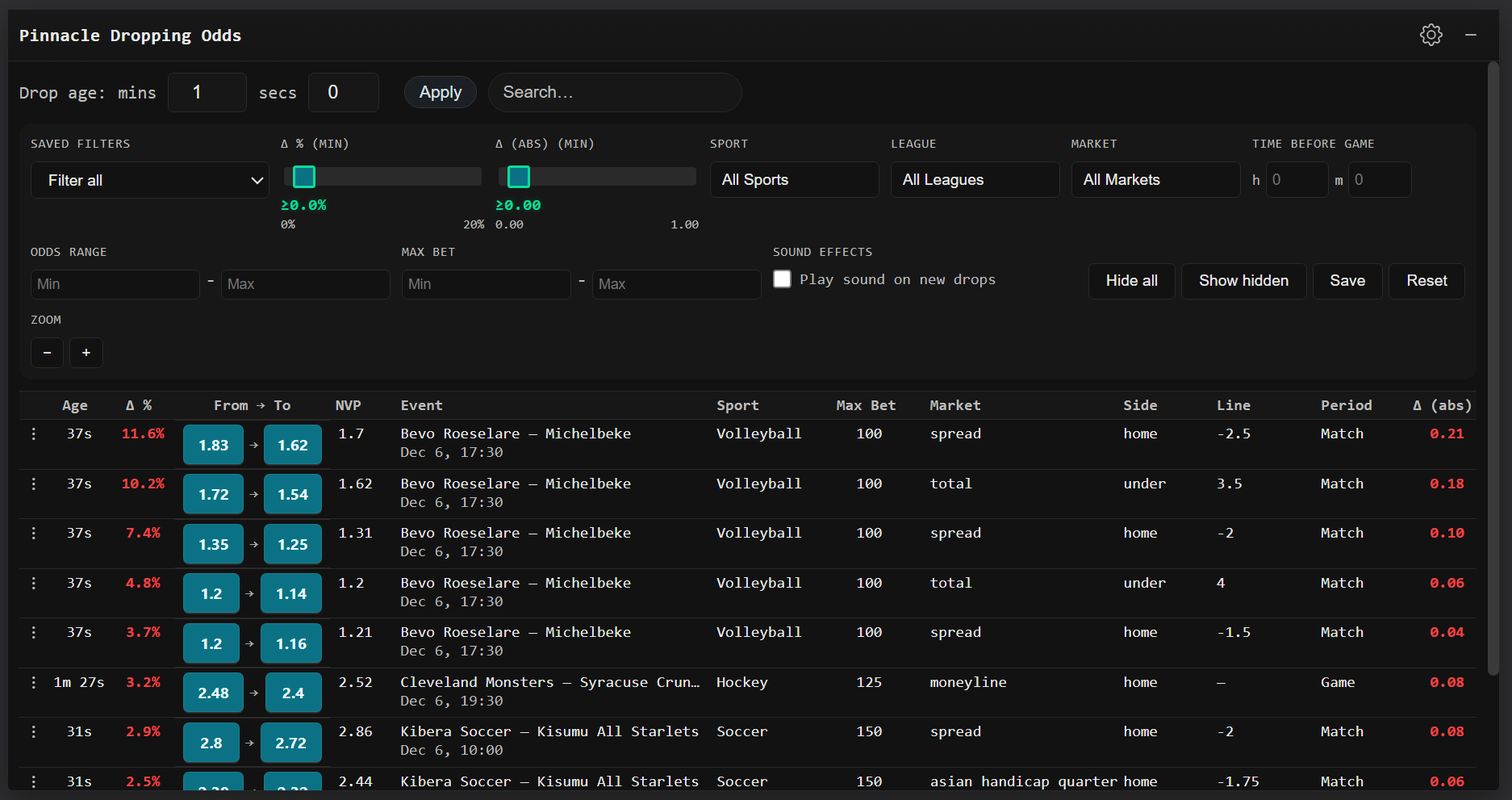
Most dropping odds alerts you receive won't result in a value bet, and that's completely normal.
Beginners using the dropping odds strategy typically place one bet for every five alerts they receive. More experienced bettors who understand prime betting times and profitable markets can do better than this, but they still need to filter through many alerts that don't lead to bets.
You might experience streaks of 10-15 consecutive alerts that don't convert to bets, which is expected in this strategy.
Keep in mind: you profit from placing good bets, but you don't lose anything by skipping bad ones. Stay disciplined and don't let dry periods discourage you.
Your alert-to-bet conversion rate will vary significantly based on your location and which bookmakers you can access. Don't assume you're doing something wrong if others have better ratios—they might simply have access to different market conditions.
This guide covers the two primary reasons why alerts often don't convert to bets and provides practical tips to improve your alert-to-bet ratio.
Reason 1: The Soft Bookmakers Have Already Dropped Their Odds
While soft bookmakers often adjust their odds slowly, they don't always lag behind sharp bookmakers.
The primary reason alerts don't convert to bets is that soft bookmakers have already moved their odds to align with the sharp bookmaker, removing any value from the bet.
When you check the soft bookmaker after receiving an alert, you may find they've already updated their odds to match the sharp bookmaker's movement, which eliminates the value opportunity.
Speed Up Your Process
While you can't control how quickly soft bookmakers adjust their odds, you can control how fast you respond to alerts. Minimize delays when moving from alert to placing your bet.
Ways to accelerate your betting workflow:
- Keep soft bookmaker sites open in separate browser tabs with search functions ready
- Enable sound notifications and keep volume high so you don't miss alerts
- Train yourself to quickly identify team names, markets, and odds from alerts without revisiting the alert system
- Adopt a fixed stake approach so you know your bet size immediately without calculating
For more information on bankroll management strategies, see our bankroll management guide. To learn more about the dropping odds strategy, check out our dropping odds strategy guide.
Work in Markets That Are Slow to Adjust
After using this strategy for some time, patterns will emerge. You might notice specific competitions consistently offer value, or certain bookmakers are consistently slower to adjust odds.
When you identify these patterns, focus your efforts there—you've found your best fishing spots.
Configure your alert filters to prioritize these profitable areas, and your alert-to-bet conversion rate will improve.
Since bookmaker availability, market coverage, and price sensitivity vary by country, sport, and competition, I can't tell you exactly which bookmakers or markets will work best for you. However, through regular betting, you'll discover which ones perform well for your situation, so stay persistent and observant.
For more information on setting up filters and optimizing your strategy, see our Pinnacle dropping odds manual and Pinnacle dropping odds guide.
Reason 2: Your Softs Don't Have the Market
Bookmakers vary in their market coverage—not every bookmaker offers every sport, league, market type, or betting option.
You'll often find that alerts don't lead to bets because your soft bookmakers don't offer the specific market. This happens frequently with niche sports, lower-tier competitions, or specialized markets that most soft bookmakers don't cover.
Add Markets to Your Coverage
Expand your market access by opening accounts with additional soft bookmakers, especially those known for broad and deep market coverage.
Different bookmakers specialize in different areas—some cover many sports and leagues comprehensively, while others focus on specific markets. Maintaining accounts with multiple bookmakers improves your odds of finding the markets you need.
Check Derivative or Correlated Markets
If odds drop for over 3.25 goals at the sharp bookmaker but your soft bookmakers only offer over 3.0 goals, don't give up—these markets are closely correlated, so the over 3.0 goals odds will likely have moved as well.
Related markets tend to move together since they reflect similar outcomes. When one market's odds shift, connected markets usually follow.
Review all available markets for the alerted event through your alert system to identify alternative betting options.
For more information on understanding market correlations, see our dropping odds strategy guide.
Exclude Competitions
Another solution is to use competition filters to exclude competitions your bookmakers don't cover.
When you regularly receive alerts for competitions your bookmakers don't offer, remove those competitions from your alert settings. This helps you concentrate on markets where you can actually place bets.
As you continue betting, you'll develop a list of competitions and markets that work effectively with your bookmaker accounts, enabling you to fine-tune your alert setup.
Why Value Betting Isn't Baseball
The advantage of value betting is that there are no strikes—you don't lose anything by skipping bets without value. If an alert appears but offers no value, simply wait for the next opportunity.
However, you do lose money by placing bets with negative expected value, so resist the temptation to bet during slow periods just to stay active.
As mentioned earlier, you'll experience dry spells with 10-15 consecutive alerts that don't convert to bets. Discipline is crucial in value betting—stay strict with yourself and avoid sabotaging your results during slow periods by either giving up or placing negative EV bets.
Value betting is a long-term approach. Temporary dry spells don't determine your success. Focus on consistently placing bets with positive expected value when genuine opportunities appear.
For more information on maintaining discipline and managing variance, see our variance in sports betting guide.
Ready to improve your alert-to-bet ratio? Use FairOdds Terminal to get real-time dropping odds alerts and identify value betting opportunities across hundreds of bookmakers.
Dropping Odds Alerts FAQ
Why don't most dropping odds alerts lead to value bets?
The majority of dropping odds alerts don't lead to value bets because either the soft bookmakers have already dropped their odds to match the sharp bookmaker, or your soft bookmakers don't have the market available. This is normal and expected in dropping odds betting.
What is a good alert-to-bet ratio for dropping odds?
If you are new to the dropping odds strategy, you can expect to place one bet for every five alerts. More experienced bettors with knowledge of prime times and fruitful markets can improve significantly on that ratio.
How can I speed up my betting process to catch value bets faster?
To speed up your process, have your soft bookmakers open in separate tabs with search bars ready, keep alerts unmuted with volume up, practice reading team names and markets quickly, and use a fixed stake strategy so you know exactly how much to bet without calculations.
What should I do if my soft bookmakers don't have the market?
If your soft bookmakers don't have the exact market, check derivative or correlated markets. For example, if odds drop for over 3.25 goals and your softs don't have that market, check the over 3.0 goals market as they are heavily correlated. You can also exclude competitions that your bookmakers don't cover.
Should I place bets even when alerts don't show value?
No. You don't pay a penalty for allowing a bad bet to pass you by, but you do pay a penalty for placing a bet at negative expected value. Stay disciplined and don't get tempted to place bad bets during slow periods. Wait for the next alert with genuine value.